A Guide to Multicultural Wedding Photography
Multicultural weddings are the fastest-growing category in wedding photography worldwide — and the most rewarding to document.
When two cultures meet at the altar, the celebration becomes richer, more layered, and infinitely more meaningful. But it also becomes more complex. More ceremonies, more traditions, more emotional peaks, more outfit changes, more family dynamics.
After a decade of documenting Malay, Chinese, Indian, Punjabi, Korean, and fusion ceremonies across 8 countries, here's what we've learned about photographing weddings where two worlds become one.
What makes multicultural weddings different.
A single-culture wedding typically follows one ceremony structure, one timeline, one set of traditions. A multicultural wedding multiplies everything.
Punjabi celebrations can span three days — Mehendi, Sangeet, the Sikh Anand Karaj ceremony, and a reception — each with its own energy, attire, and rituals. A Chinese-Western wedding might begin with a morning tea ceremony in traditional red and transition to a church ceremony in white by afternoon. A Malay-Korean couple might blend a solemnisation nikah with a modern hanok ceremony across two countries and two weekends.
Each of these moments has its own emotional peak. Each requires a photographer who knows what's about to happen before it happens.
The dress changes alone are significant — three to five outfit changes across a multi-day celebration is standard. Each outfit tells a different cultural story. Each transition requires the photographer to reset, adapt, and be ready for a completely different visual language.
This isn't just wedding photography. It's cultural documentation.
The ceremonies we've documented.
Malay weddings
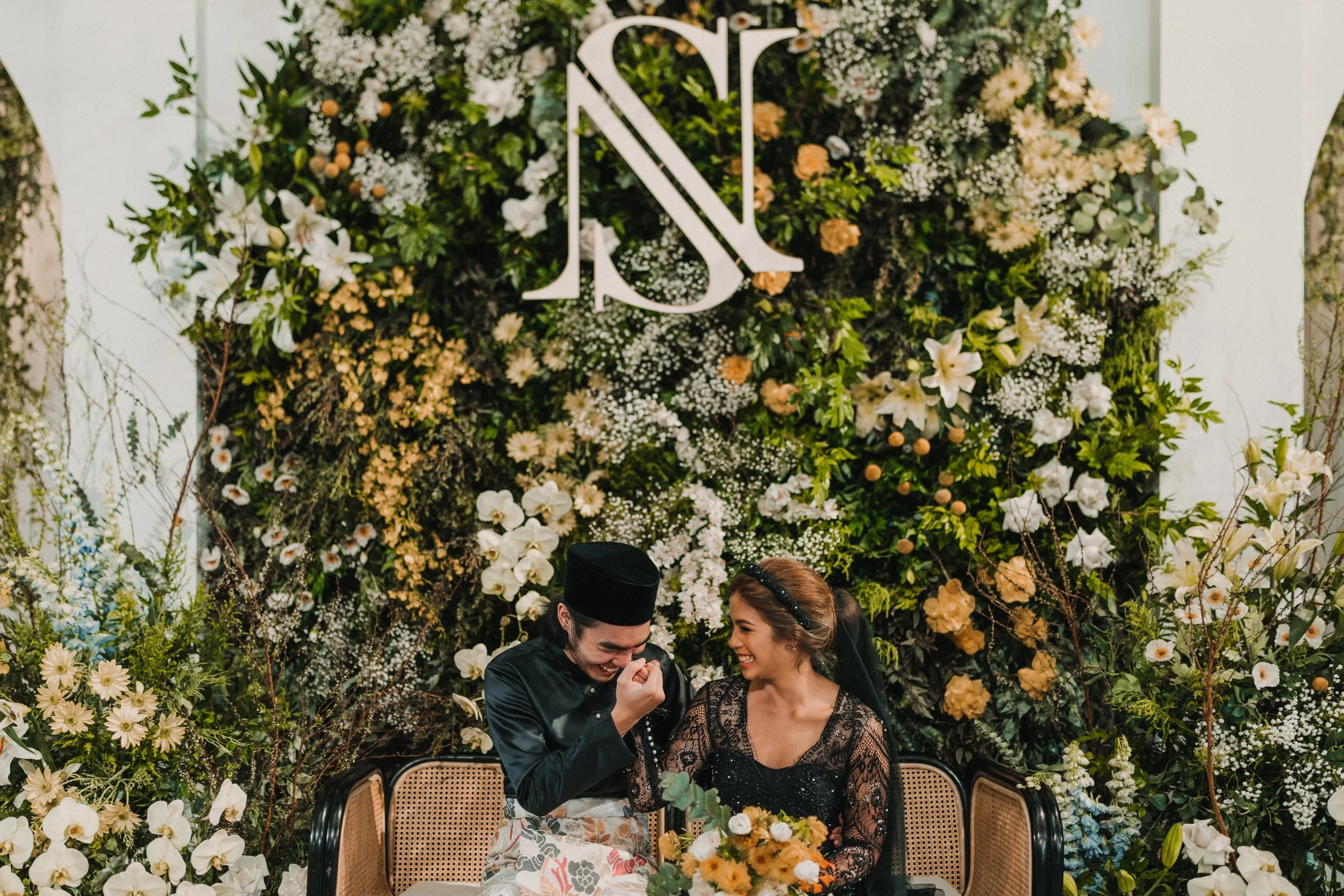
The Malay wedding tradition is rich with symbolism and ritual. The akad nikah — the solemnisation — is the most sacred moment, often happening quickly and quietly. If you blink, you miss it. A photographer who hasn't shot a Malay wedding before won't know to be ready for the exact second the groom completes the lafaz.
The bersanding ceremony that follows is more visual — the couple seated on a pelamin, surrounded by family, blessed with bunga rampai. The colours, the textiles, the kompang drumming — it's one of the most photogenic ceremonies in the world.
What makes it challenging: the pace shifts dramatically between the intimate akad nikah and the grand bersanding. You need to switch from quiet documentary mode to vibrant celebration coverage in minutes.
Indian and Punjabi weddings
Nothing in wedding photography matches the energy of a baraat entrance. The groom arriving on horseback, the dhol drummers, the dancing family members, the sheer volume of joy — it's controlled chaos, and it's magnificent.
Indian weddings are multi-sensory experiences. The haldi ceremony covers everyone in turmeric yellow. The Sangeet night is a performance showcase. The Hindu ceremony circles the sacred fire. The Sikh Anand Karaj reads from the Guru Granth Sahib while the couple circles four times.
Each ritual has a specific moment that matters most. The sindoor application. The mangalsutra placement. The jaimala garland exchange. Miss any of these, and you've failed the couple. A photographer needs to know exactly when each moment happens — because there are no second chances.
What makes it challenging: multi-day stamina. Three days of coverage, each running 12-16 hours, in venues that shift from intimate mandaps to grand ballrooms. You need physical endurance and emotional awareness in equal measure.
Chinese weddings
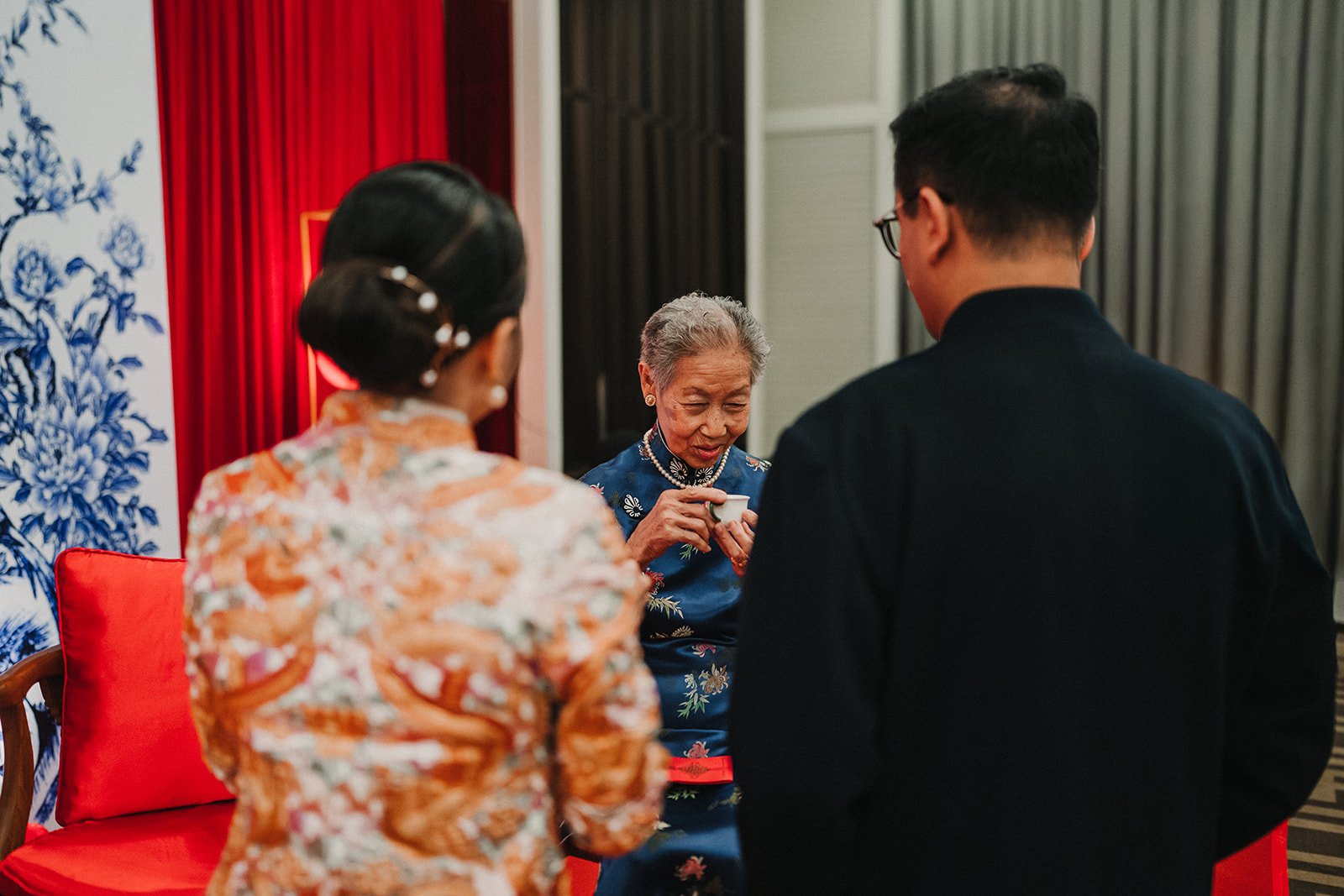
The Chinese wedding tradition centres on the tea ceremony — a deeply intimate ritual where the couple serves tea to elders in order of seniority, receiving blessings and red packets in return. The emotions here are quiet but powerful. Grandmothers weep. Fathers who never show emotion suddenly do.
The gate-crashing games that precede the bride's departure are pure comedy — the groom and his groomsmen completing challenges set by the bridesmaids. It's loud, chaotic, and hilarious. Photographing it requires fast reflexes and a sense of humour.
The banquet reception is the grand finale — elaborate table settings, multiple courses, speeches, yam seng toasts, and family pride on full display.
What makes it challenging: the tonal shifts. Within a single day, you move from the sacred quiet of the tea ceremony to the comedy of gate-crashing to the grandeur of a 500-person banquet. Each demands a different photographic approach.
Korean weddings
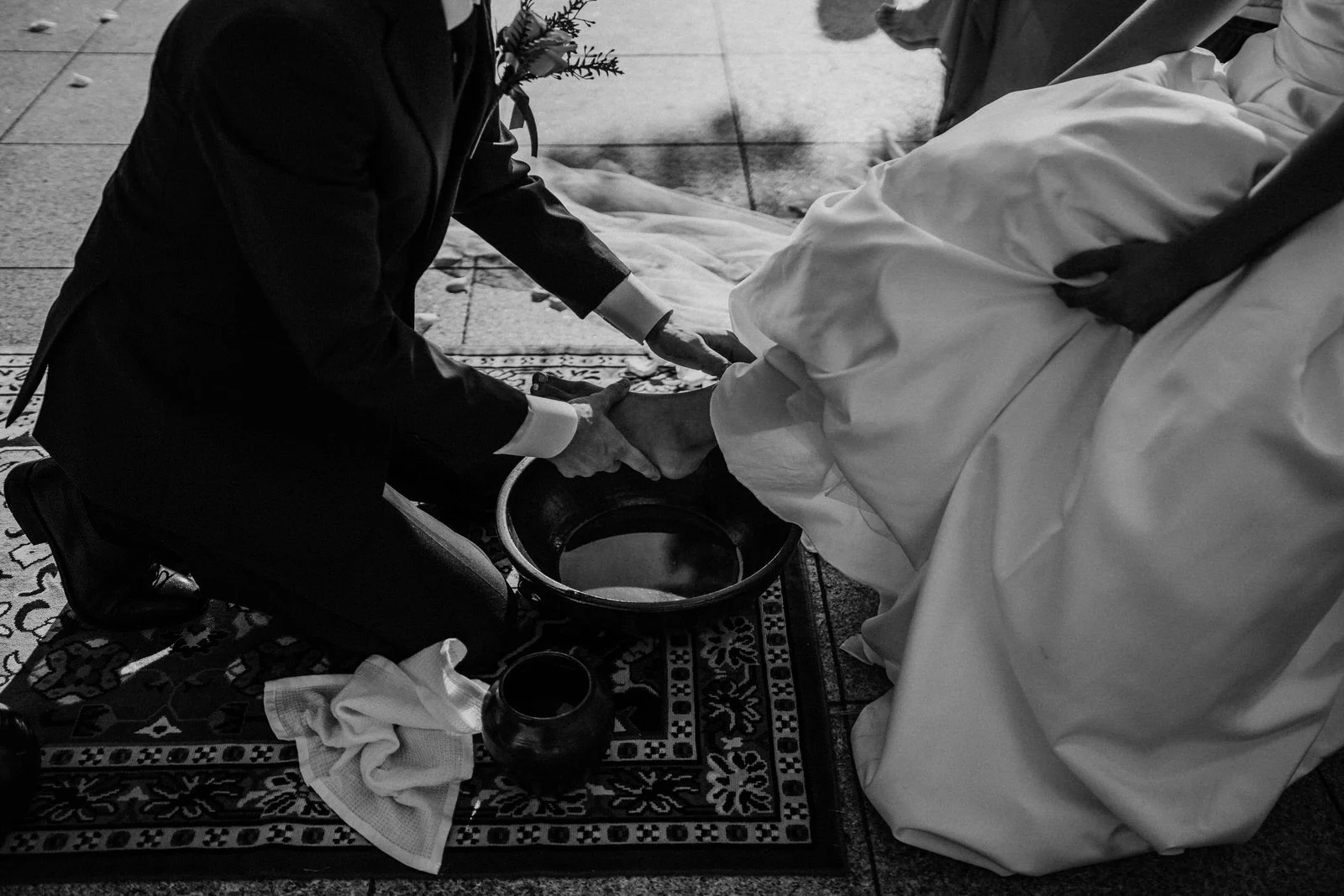
Korean weddings beautifully blend tradition and modernity. The pyebaek ceremony — where the couple pays respect to elders in traditional hanbok attire — is one of the most visually striking wedding rituals we've documented. The bowing, the chestnut tossing, the formal beauty of the moment.
Modern Korean ceremonies often take place in dedicated wedding halls or, increasingly, in hanok traditional houses that offer architectural drama and cultural depth.
What makes it challenging: the pyebaek often happens in a small side room with limited space and mixed lighting. You need to create magazine-worthy images in conditions that are far from ideal.
Fusion and interfaith weddings
Two-ceremony weddings are becoming standard for multicultural couples. A morning temple ceremony followed by an afternoon church wedding. A Hindu ritual at sunrise, a Western reception at sunset. A Sikh Anand Karaj in London, a beach reception in Bali the following week.
The photographer's role in fusion weddings is to respect both traditions equally — never favouring one culture's moments over the other's. Both families are watching. Both families need to feel that their traditions were honoured and beautifully documented.
What makes it challenging: balancing two complete sets of expectations, two timelines, and often two completely different aesthetics within a single celebration.
How to choose a photographer for your multicultural wedding.
Not every photographer can handle the complexity of a multicultural celebration. Here's what to look for:
Ask directly: "Have you shot a wedding with our specific cultural traditions before?" Then ask to see the full gallery — not just two or three images pulled from a highlights reel.
Verify their cultural knowledge. A photographer who's never shot an Indian wedding won't know when the sindoor moment happens. Someone unfamiliar with a Malay solemnisation won't be positioned correctly for the lafaz. Cultural literacy isn't optional — it's the difference between capturing the moment and missing it entirely.
Check their sensitivity. Will they remove their shoes in a mosque? Cover their head in a Gurdwara? Respect moments where photography isn't permitted? Ask how they've handled these situations before.
Look for multi-day experience. If your celebration spans two or three days, your photographer needs the stamina and planning skills to maintain quality from day one to day three.
Assess their range. A multicultural wedding demands versatility — quiet intimacy during a tea ceremony, explosive energy during a baraat, editorial elegance during portraits, documentary instinct during candid family moments. All in the same day. Look for a photographer whose portfolio demonstrates this range.
Planning tips for multicultural couples.
Share a timeline for each ceremony with your photographer — not just one overall timeline. Each cultural ceremony has its own rhythm, and your photographer needs to study all of them.
Introduce your photographer to key family members beforehand. Grandmothers, uncles with ceremonial roles, the aunt who'll cry during the blessing — knowing who matters helps us be in the right place at the right time.
Discuss cultural boundaries openly. Some ceremonies prohibit photography during specific sacred moments. Some families prefer no flash during prayers. Some rituals happen so quickly that the photographer needs advance warning to be ready. Communication prevents missed moments.
Build in buffer time between ceremonies. Outfit changes take longer than expected. Family photos between events always run over. Emotional transitions between a solemn ceremony and a joyful reception need breathing room. Plan for it.
Brief your photographer on the emotional peaks. When are tears most likely? When does the energy explode? When is the quiet, sacred moment that means everything? Every culture has its own emotional arc. Help your photographer understand yours.
Why this matters.
The most powerful multicultural wedding photographs happen when the photographer doesn't just document the ceremony — they understand it. When they know that the sindoor isn't just red powder, that the tea ceremony isn't just serving drinks, that the pyebaek isn't just bowing.
Every ritual carries generations of meaning. Every tradition connects the couple to something larger than themselves. The photographer's job is to see that meaning and make it visible — not just for the couple, but for their children and grandchildren who'll one day look at these images and understand where they came from.
That's not just wedding photography. That's legacy.
Planning a multicultural celebration? We'd be honoured to hear your story.
